
100 Days of Real Food Recipes and Book Review

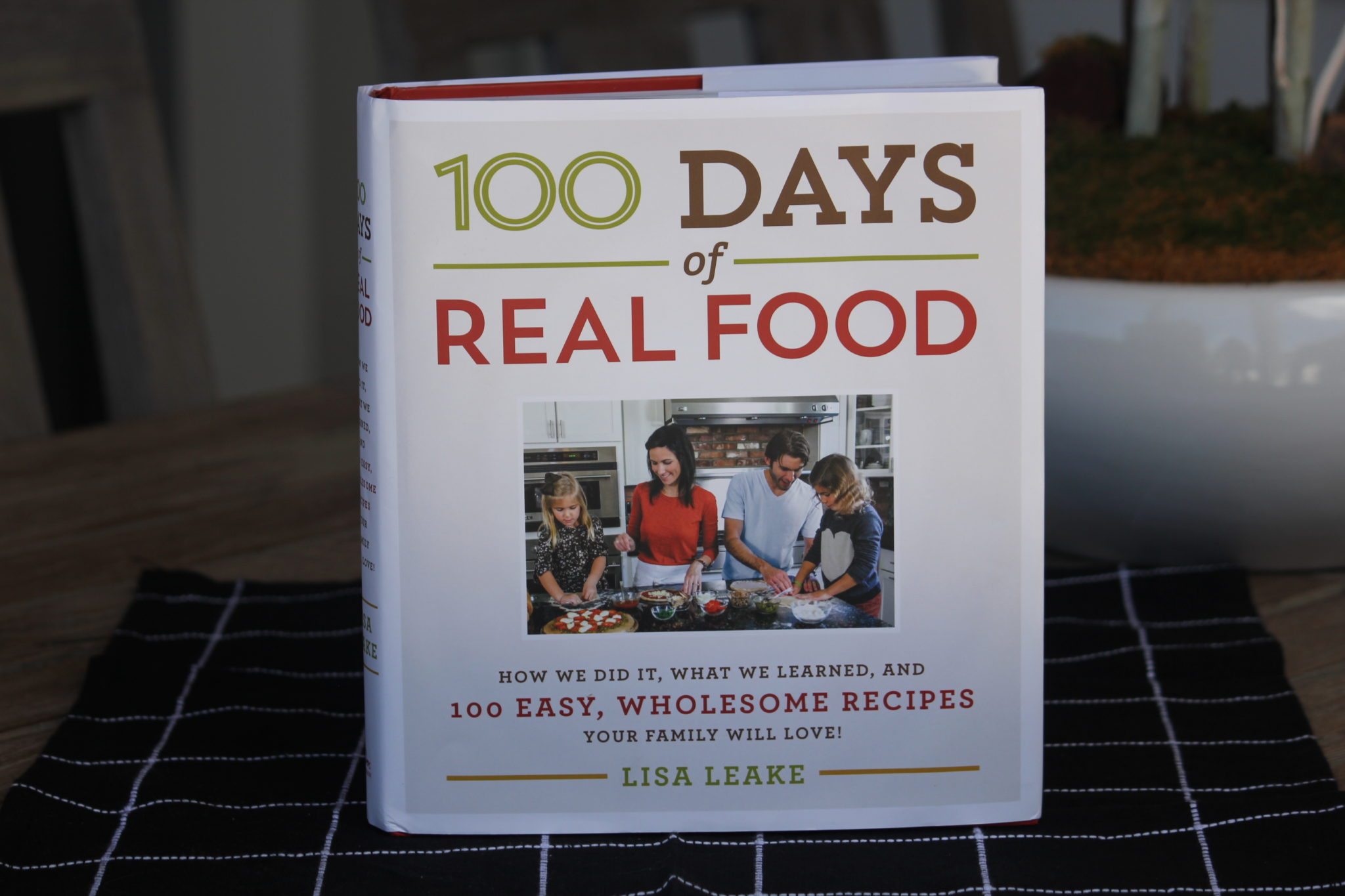
Have you heard of Lisa Leake, her 100 Days of Real Food recipes, her wildly successful blog, and her new book 100 Days of Real Food: How We Did It, What We Learned, and 100 Easy, Wholesome Recipes Your Family Will Love ?
If you have not yet heard of Lisa, I am sure you will! Along with her husband, Jason Leake (who runs a great website for bloggers by the way), she has spent the last 4 years building an incredible real-food community made up of millions of readers all over the world. Her message is simple: real food is best. It not only tastes better, it’s better for you.
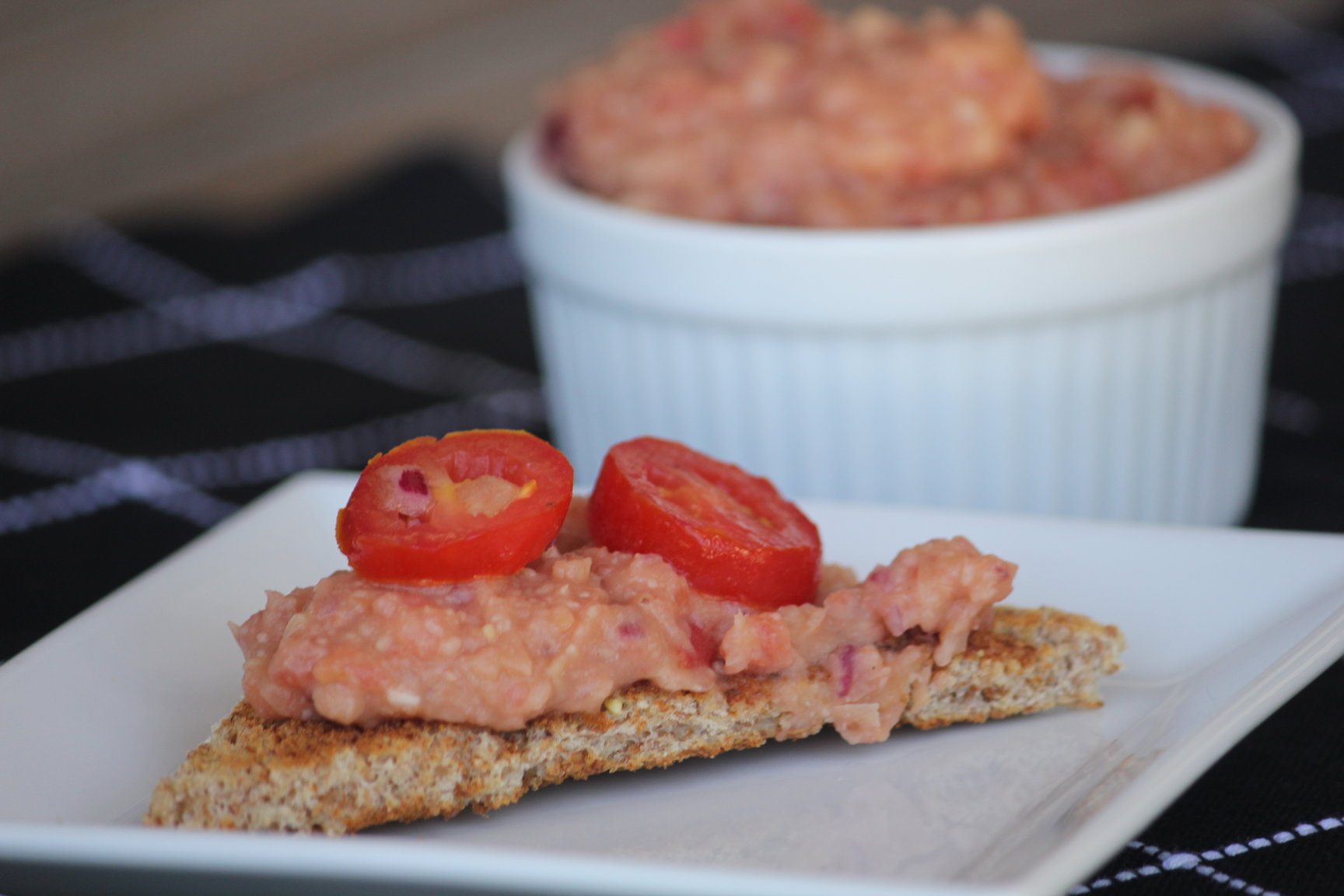
Lisa’s Real Food recipes, including her White Bean Dip (shown in the photo below), truly are delicious, doable and many are make-ahead or multipurpose—for example, the White Bean Dip turned out to be a “3-in-1” recipe (more on that in a bit…).
But, for anyone who is just starting to transition away from packaged foods and venture into the kitchen (especially with kids in tow!), Lisa’s 100 Days of Real Food recipes and guidelines in her book are sure to become a trusted kitchen companion.

Lisa Leake’s Story (the Shortened Version)
Before we get back to the bean dip I wanted to tell you a bit more about Lisa…

I first heard about Lisa’s blog from my dear friend Brooke Thomas of 360 Your Life. Andy and I have since met the Leakes and I felt a connection with Lisa from the start. I think it is because I find myself relating to Lisa’s story in so many ways. Since her 100 Days of Real Food book just launched, I figured now is the perfect time to share her journey and her very important message. I am sure you will be inspired!
Once upon a time…
Lisa happened to be minding her own business one day when she overheard a preview for an upcoming Oprah show titled “Food 101 with Michael Pollan: Where Our Food Comes From.” That day’s topic was a big wake-up call for Lisa. It was right then and there that she realized she actually did not have a clue where our food came from.
Lisa is about my age (I am 38-years old), and like the rest of us, over the years she had heard all of the exhausting and totally contradictory “healthy food” messages splashed in the magazines, on TV (and of course on packaged foods!) regarding what we should and should not eat; Margarine is better than butter! Pasta is heart healthy! NO! Pasta is fattening! Fat-free is best. No, fat-free is bad. Low-calorie means healthy. Low-carb is the way to go. And on and on it goes…
The conflicting “healthy food” messages we have all heard over and over are enough to make anyone tune out. But for whatever reason, Lisa decided to tune in to yet another message on Oprah that one particular day. As she listened to Pollan, she realized his message seemed to carry so much more weight than all of the other garbled ones she had heard in the past. Pollan was hitting the nail on the head regarding the problem with modern society’s food consumption and his solution to eating “healthy food” was so much more sustainable and considerably more real than anything Lisa had heard before—maybe it was because Pollan wasn’t trying to market a new fad “diet” book, promote a special protein powder or convince anyone that a new processed and packaged food item was in fact healthy.
For once, someone wasn’t trying to reduce what constitutes good nutrition and a healthy diet into a catchy sales or marketing pitch (low fat! low-carb! gluten-free!) Instead, Pollan was simply suggesting people eat real WHOLE food. Instead of bashing food—Pollan was defending it! Instead of blaming food for our health and weight woes, Pollan was saying food was our solution. His final call to action—“Eat food. Not too much. Mostly plants.” —is so incredibly simple, it’s genius.
However, Pollan’s solution to gaining health (and losing weight, if necessary) was not as simple as popping a vitamin pill, eliminating one single food group or adopting a fat-free or low-carb diet; the solution was to eat a variety of unprocessed whole (REAL) foods that contain REAL nutrients. And mostly plants (because unrefined “whole” plants are the most nutrient-dense foods on the earth.) The only problem with Pollan’s solution is that REAL foods don’t come in packages. REAL foods are not actually what people eat anymore!
What in the world was Lisa Leake to do? Everything Pollan had said made perfect sense. But how was she supposed to actually eat this way herself, much less feed her family?
What would her two daughters eat for snack if she could no longer feed them Goldfish?
It soon became apparent that the whole idea of eating REAL food was going to be a bit of a problem for poor Lisa. And trust me, I know exactly how she felt as I too encountered the same feelings of frustration back in 1998 after being diagnosed with a devastating illness that prompted me to change my entire diet practically overnight. It was not easy for me. And it wasn’t easy for Lisa either. Even though Lisa was not facing a health crisis, she somehow managed to stay determined to figure out how to make a “real food lifestyle” doable for herself and her whole family. In all honesty, I am not so sure I would have had the motivation to do what Lisa did had I not been facing a crisis, mostly because it was so hard to even know where to start!
Learning to Eat Real Food in the Real World with Lisa Leake
Immediately following Oprah’s show, Lisa went to her library to pick up the only copy of Michael Pollan’s book, In Defense of Food, which ultimately became the book she would model her “Real Food” lifestyle after. In my opinion, it was an excellent choice of a book as it is one of the few that really digs to the root of so many of our society’s problems with food. And as mentioned above, Pollan’s three sentence solution was so simple, it was genius.
Lisa was brilliant enough to take Pollan’s book and concept to the next level…. The main thing Pollan’s book was missing was recipes and an action plan!
If you can’t eat goldfish, what can you eat? What do you buy at the grocery? And after you buy a bunch of broccoli, carrots and cauliflower, what do you do with them? It is one thing to be told you should eat this or eat that, but it is another altogether to be given a recipe on how to prepare the food. I truly believe recipes that are tasty and easy to prepare are the essential ingredient to making any permanent lifestyle change that involves food.
Lisa solves Pollan’s missing-recipe problem in 100 Days of Real Food with a beautiful and incredibly organized book, which includes mouthwatering photography. Presenting recipes that are intrinsically “real” and delivered in a very accessible and fun way, Lisa will inspire you to lure the kids into the kitchen, grab your apron and get everybody cooking!
But maybe even more valuable than the recipes, the first 123 pages of the book provide an action plan and walk you through how to grocery shop, how to read food labels (because yes, some packaged foods are “real”), how to get your whole family on board, and much more!
If I had only had the 100 Days of Real Food book when I started my own “Real Food” / “Whole Food” odyssey over 15 years ago, life would have been a whole lot easier (tastier too!) It truly is an excellent book for getting the whole family (including the kids!) started eating real food with REAL nutrients.
I mean, what kid would not want to eat Homemade Granola Cereal, Potato Hash, Southwest Chicken Wraps or Homemade Chicken Noodle Soup?
100 Days of Real Food Recipes
Now, on to my review of Lisa’s book. While Clean Cuisine takes more of an anti-inflammatory approach with our recipes (more on that below), Lisa’s book is a perfect way for those of you wishing to break away from packaged food and get you started eating “real food.” One of the things I really love about the 100 Days of Real Food book is that so many of the recipes can be used more as a guideline or for inspiration, as opposed to following the recipe to a Tee. Again, very real world.
For example, the White Bean Dip on page 195 of Lisa’s book (see photo at the beginning of the article) called for very basic ingredients such as cannellini beans, red onion, tomatoes and olive oil. I was in a hurry the day I made Lisa’s dip and didn’t have time to measure, so I just used her recipe as a guideline for the ingredients. I also didn’t have a whole tomato on hand, so I just chopped up a few cherry tomatoes and threw those in instead. It was so simple and so delicious.
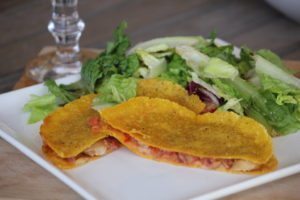
Her White Bean Dip turned out to be a “3 in 1” recipe as I later mashed it for a smooth bean dip (see photo) and spread it on sprouted whole grain crostini and then used it as the filling for my lunch quesadilla the next day (see photo).
Even though many of the 100 Days of Real Food recipes might seem basic at first glance, I guarantee they will get you thinking more creatively on how to use simple “real food” ingredients in a fun new way. The Cinnamon Apple Chips (see photo below) on page 198 are a perfect example! The Apple Chips had just 2 ingredients and took less than 5 minutes of hands on prep time. And yet they were such a simple, fun snack and a brilliantly easy way to get kids to eat more fruit (the recipe said it served 2 to 4 and my son ate the whole batch!)

- “Cinnamon Apple Chips” featured on page 198 of 100 Days of Real Food

Using 100 Days of Real Food Recipes While Following the Clean Cuisine Anti-Inflammatory Program
If you are a regular reader of Clean Cuisine then there is a high chance you are trying to follow an anti-inflammatory nutrition program or stumbled upon our website because you have an inflammatory condition (like I do) such as fibromyalgia, endometriosis, asthma, allergies, eczema, multiple sclerosis, heart disease, etc. Or maybe you just had a few pounds to lose or simply want to optimize your health.
If you are following an anti-inflammatory nutrition program, it is important to note that the 100 Days of Real Food recipes were not developed with the intention of being anti-inflammatory. Having said that, if you currently eat the standard American Diet (S.A.D.) and you start following the advice in part 1 of Lisa’s book and also start making her 100 Days of Real Food recipes, then you will surely reduce inflammation within your body. In fact, if your foods choices today are comprised of the S.A.D. processed “food like substances” most typical in the modern day diet and you followed Lisa’s advice to a tee for 100 days, then you would surely see a decrease in your body’s C-reactive protein (CRP) levels. CRP is a good overall marker of inflammation that your doctor can measure with simple lab work.
Along with reducing your CRP levels you would also probably improve your cholesterol ratio, decrease your triglycerides, reduce your blood pressure and drop a few pounds too. Not bad considering you wouldn’t be counting a single calorie, fat gram or carb!
In this era of food subtraction, low-fat, low-calorie and low-carb dieting, the benefits associated with eating real foods and whole food carbohydrates have been largely overlooked—-despite the fact that the whole foods/ real foods approach to eating has been shown to be superior to all other dietary lifestyles when it comes to preventing coronary heart disease! (1) The difference between a healthful, balanced “whole foods” lifestyle and conventional diets when it comes to heart disease can be greater than 70 percent, far greater than the benefit offered by medications such as aspirin, beta-blockers, cholesterol-lowering drugs or any pills on the market for that matter.
However, if you have an active inflammatory issue and you are desperate to get your symptoms under control as quickly as possible (and believe me, I understand being desperate and needing results faster than quick!) then you can simply modify the 100 Days of Real Food Recipes and guidelines in Lisa’s book. Here is all you need to do:
- Limit the amount of meat and dairy. And why not try “Meat Free Mondays” and make one of Lisa’s delicious plant-based recipes such as her Quinoa Veggie Burger (page 254)? Or try her Whole Wheat Pizza crust recipe (page 250) with a no-cheese BBQ theme using her BBQ sauce recipe (page 316) plus roasted onions, roasted peppers, pineapple, cilantro and crumbled raw macadamia nuts instead of cheese?
- Substitute an unrefined, cold-pressed and extra virgin coconut oil for the butter whenever possible (note: as long as the coconut oil is superior quality, such as Barlean’s Extra Virgin Organic Coconut Oil, it should not impart any unwanted coconut-flavor on the recipe and should be an easy, anti-inflammatory and phytonutrient-rich swap for the butter.)
- Swap nutrient-dense and phytonutrient-rich non-dairy milks for cow’s milk (I like hemp milk better than the more popular almond milk because the fat content in hemp milk is higher, it is more nutrient-dense than almond milk and it has the rich and creamy texture of full fat dairy.) And either don’t use the dairy-based sour cream called for in the recipes or simply make a homemade plant-based sour cream made from nuts such as cashews. And yes, I know it sounds crazy that a nut-based sour cream would taste good, but I have an amazing non-dairy sour cream recipe that I promise will blow you away!
- Make a fish recipe (for anti-inflammatory omega-3’s!) at least twice a week —the fattier the fish the better and be sure to use wild (which Lisa recommends, by the way.) 100 Days of Real Food offers a few delicious-sounding and easy fish recipes (such as the Grilled Terriyaki Wild Salmon) so be sure to give them a try.
- Look for ways to add in at least 2 tablespoons of ground flaxseeds or chia seeds in your day (again, more anti-inflammatory omega-3’s!)
- Be sure to eat a fruit and / or vegetable with every meal! I know Lisa says this in the book, but a reminder can’t hurt since not eating enough fruits and vegetables is the #1 diet mistake most people make.
And there you have it! Just keep in mind that whether you make all of the changes overnight, in 10 days or in 100 days, the most important thing is that the changes you make are ones that you plan to stick with long term. There is absolutely no point in doing a 10-day “cleanse” just to go back to your old ways once the cleanse is done.
I really do congratulate Lisa for putting together such a wonderful resource that I know will help so many families clean up their plates and start to feel better. I can tell you one thing, it is NOT easy to pull together all of the conflicting nutrition information out there and condense it into one common sense approach and “lifestyle” that is actually doable in the real world, but Lisa managed to do it and she did so in such a fun and accessible way. Way to go Lisa!! =)
(Note: You can read my full book review of 100 Days of Real Food HERE on Amazon.)
Reference:
1. Hu FB, Willett WC. “Optimal Diets for Prevention of Coronary Heart Disease.” JAMA. 2002 Nov 27;288(20): 2569-78.










One Comment